

What Is a Chair Sash? A Complete Guide to Types, Materials & Sash Fabrics
Quick Summary: A chair sash is a length of decorative fabric tied, draped or knotted around the back of an event chair to add colour, texture and polish to a venue. Chair sashes come in several styles - bows, knots, wraps and flat bands - and are made from fabrics such as satin, organza, taffeta, lace, hessian and sequin, each suited to different themes from classic ballroom weddings to relaxed barn celebrations. This guide covers what chair sashes are, the different types and materials available, how to tie them, how to choose colours that work with your table styling, and practical guidance on quantities, care and storage, drawing on IMA Trading's experience supplying chair sashes to venues, planners and couples across the UK since 2008.
If you've ever walked into a wedding breakfast or gala dinner and noticed how every chair seems to "belong" to the room, chances are chair sashes played a part in that effect. They're one of the smallest décor items on a table plan, yet they do a disproportionate amount of visual work - tying a colour scheme together, softening rows of plain seating, and giving guests something elegant to look at long before the first course arrives.
At IMA Trading, we've spent years supplying chair sashes wholesale to venues, wedding stylists and event planners across the UK, and we're regularly asked the same handful of questions: what actually is a chair sash, what's it made from, and which style suits which setting? This guide answers all of that in one place. Whether you're planning a single wedding, restocking a hire business, or simply want to understand your options before you buy, you'll find practical, first-hand guidance below on chair sash types, materials, tying methods, colour matching and event styling.
Table of Contents
- What Is a Chair Sash?
- What Are Chair Sashes Used For?
- What Are the Different Types of Chair Sashes?
- What Materials Are Chair Sashes Made From?
- What Is the Best Fabric for Chair Sashes?
- What Types of Chairs Can You Use Chair Sashes On?
- How Do You Tie a Chair Sash?
- How Do You Choose the Right Chair Sash Colour?
- Should Chair Sashes Match the Table Decorations?
- Chair Sash vs Chair Band: What Is the Difference?
- How Many Chair Sashes Do You Need?
- How Do You Care for and Store Chair Sashes?
- How Do You Style Chair Sashes for Different Events?
- Chair Sash Ideas for Weddings and Events
- Conclusion
- FAQs
What Is a Chair Sash?
So, what is a chair sash? Well, a chair sash is a decorative strip of fabric tied around a chair to dress up event seating.
A chair sash is a long, narrow piece of fabric, typically tied around the back of a banquet or Chiavari-style chair to create a bow, knot or draped feature. Most sashes measure somewhere around 22cm wide and 275–280cm long, though widths and lengths vary by fabric and supplier. The idea is simple: wrap the sash around the chair back, cinch it at the centre, and finish with a bow, knot or flat tie that sits neatly against the chair cover.
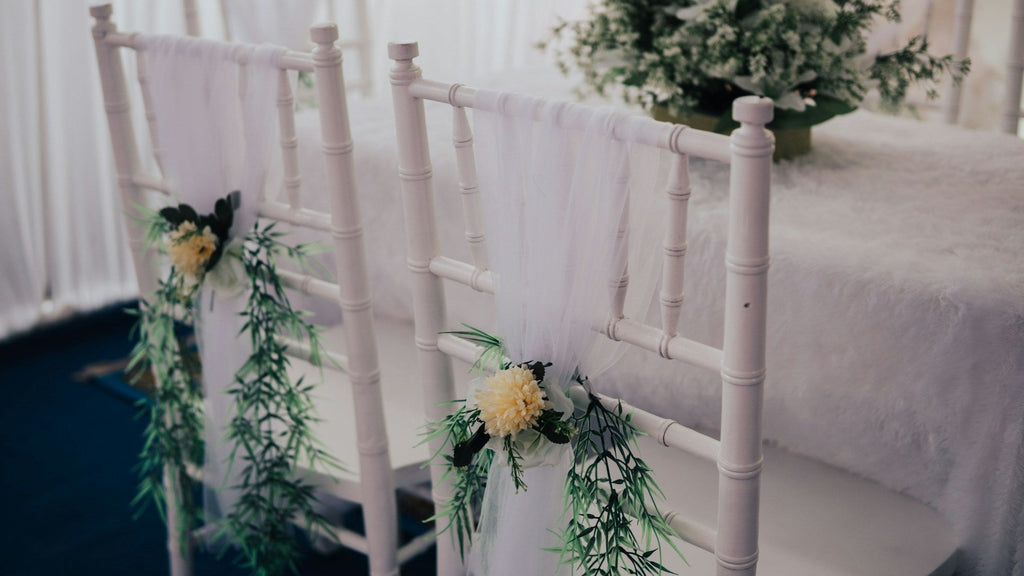
Sashes are almost always used in combination with a chair cover, though some sash fabrics - hessian and lace in particular - look striking tied directly onto a bare wooden or Chiavari chair without a cover underneath. We go into more depth on the concept, history and practical uses of the product in our dedicated guide, Wedding Chair Sashes Explained, which is worth a read if you want the fuller picture before diving into fabric and colour choices. For the products themselves, our full chair sashes and bands collection is a good starting point to see the range available.
What Are Chair Sashes Used For?
Chair sashes are used to add colour, texture and a sense of occasion to event seating.
Beyond simply looking attractive, chair sashes serve a few practical purposes. They introduce colour into a room without the cost of full re-upholstery or a themed venue redesign, they help distinguish "dressed" seating from everyday furniture, and they can subtly indicate seating arrangements - a contrasting sash on the top table, for instance, or a different colour marking reserved seats.
They're used extensively at weddings, but also at corporate dinners, awards ceremonies, christenings, proms and hotel banqueting events. Because a plain chair cover can look slightly clinical on its own, a sash is often the finishing touch that makes a room feel styled rather than simply set up. Many of our customers pair sashes with our wedding chair covers as a complete seating package, since the two are designed to be used together.
Practical and Decorative Roles
A sash can be purely decorative, or it can carry meaning within the room's layout. Colour-coded sashes are a popular, low-cost way for planners to differentiate top tables, VIP rows or specific zones within a large venue, without needing separate signage.
What Are the Different Types of Chair Sashes?
Chair sashes come in several distinct styles, each suited to a different finish and level of formality.
When people search for different types of chair sashes, they're usually asking about two things at once: the shape or finishing style of the sash, and the fabric it's made from. We'll deal with fabric in the next section, but in terms of style, sashes generally fall into a few recognisable categories.
Classic Bow Sashes
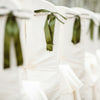
The traditional bow sash is tied at the centre back of the chair, with two loops and trailing tails. This is the most widely recognised chair sash style and works well across almost every venue type, from marquees to ballrooms.
Knot and Wrap Styles
Rather than a bow, some sashes are simply knotted once or twice, or wrapped around the chair back and tucked without tails. This style tends to suit more relaxed or modern events, where a fuller bow might look overly formal.
Draped and Layered Sashes
For a softer, more textured look, some venues layer two sashes of different fabrics - for example, a sheer organza sash over a solid satin one - or drape a single length loosely across the chair back rather than tying it tightly. This works particularly well with our lace hoods, which are designed to sit over the top of a chair for extra dimension.
Flat Band Sashes
A flat band, sometimes called a chair band, skips the bow entirely and sits as a straight strip across the chair back, often fastened with a buckle or clip rather than tied. These are quicker to fit at scale and popular with venues managing large guest counts. We cover the distinction between sashes and bands in more detail further down this guide.
Below is a quick comparison of the main style categories to help you decide which suits your setting.
|
Sash Style |
Typical Look |
Best Suited To |
|
Classic Bow |
Structured, symmetrical bow with tails |
Weddings, formal receptions, ballrooms |
|
Knot / Wrap |
Simple, relaxed single or double knot |
Modern, minimalist or outdoor events |
|
Draped / Layered |
Soft, loose, often layered sash fabrics |
Boho, vintage or textured styling |
|
Flat Band |
Straight strip, buckle or clip fastening |
Large-scale venues, corporate events, fast turnaround |
What Materials Are Chair Sashes Made From?
Chair sashes are made from a range of fabrics, from crisp satin to soft organza and textured hessian.
The material a chair sash is made from affects everything from how it holds a bow to how it catches the light. At IMA Trading, our chair sash fabric range includes satin, organza, taffeta, crushed taffeta, lace, hessian and sequin, each offering a distinct finish.
Satin is smooth and slightly glossy, holding a crisp bow shape well, which is why it remains our most popular chair sash fabric. Organza is sheer and lightweight, giving a delicate, almost transparent finish that layers beautifully over other fabrics - our organza sashes are frequently used for exactly this purpose. Taffeta has more body and a subtle sheen, while crushed taffeta introduces natural texture through its crinkled finish. Lace, from our lace chair sashes range, brings a vintage or romantic quality, and hessian offers a woven, rustic texture that pairs naturally with wooden furniture. For events that call for sparkle, our sequin bands add shimmer without needing a bow at all.
Natural vs Synthetic Sash Fabrics
Most wholesale chair sashes, in our range, are made from synthetic fibres such as polyester. This isn't a compromise on appearance - polyester satin and organza both drape and hold shape extremely well - but it does mean the fabric is more durable, easier to clean, and significantly better value for repeated commercial use than natural fibres like silk. Hessian is the main natural-fibre option in most ranges, valued specifically for its raw, woven texture rather than any drape quality.
Choosing the Right Chair Sash Material
There is no single best chair sash material for every event. The right choice depends on the look you want to create, the type of chair being decorated and how you want the sash to behave.
For a classic and formal finish, satin and taffeta are strong choices because they create defined bows and structured designs. If you prefer something lighter and more delicate, organza provides a sheer finish with plenty of versatility. Lace works well for romantic or vintage-inspired styling, while hessian is better suited to rustic and natural themes. Crushed taffeta adds texture, and sequin bands provide an alternative for events where sparkle is the priority.
The way the sash will be tied is also worth considering. If you want a large, structured bow, a fabric with enough body to hold its shape will generally be more suitable than a very lightweight material. For flowing, layered or draped designs, softer or sheer fabrics can create a more relaxed appearance.
What Is the Best Fabric for Chair Sashes?
The best chair sash fabric depends on your venue style, though satin remains the most versatile all-round choice.
There isn't a single "best" fabric, because so much depends on the look you're going for and the chair or cover you're working with. That said, in our experience supplying event professionals across the UK, satin is the fabric most planners reach for by default. It ties a clean, defined bow, catches light nicely under venue lighting, and is available in the widest colour range, including our full satin sashes collection.
Where a softer or more layered look is wanted, organza or taffeta chair sashes tend to be the better fit - taffeta sashes in particular give a slightly more structured, formal finish than satin without moving into overly stiff territory. For rustic, barn or countryside venues, hessian consistently performs best, both aesthetically and practically, since it doesn't compete with existing natural textures in the room.
The table below summarises how the main fabrics compare, which is a useful starting point before ordering samples.
|
Fabric |
Finish |
Holds a Bow |
Best For |
|
Satin |
Smooth, subtle sheen |
Excellent |
All-round use, weddings, formal dining |
|
Organza |
Sheer, lightweight |
Moderate (best layered) |
Soft, romantic or layered styling |
|
Taffeta |
Structured, gentle sheen |
Very good |
Formal receptions, ballrooms |
|
Lace |
Delicate, patterned |
Moderate |
Vintage, rustic-elegant themes |
|
Hessian |
Woven, matte texture |
Good (knots better than bows) |
Barn weddings, rustic and outdoor events |
|
Sequin |
Sparkling, reflective |
N/A (worn as a band) |
Evening events, parties, glamorous themes |
What Types of Chairs Can You Use Chair Sashes On?
Chair sashes can be used on most banquet, folding and Chiavari-style chairs found at UK venues.
Chair sashes are designed to be versatile, and in practice they work on almost any chair with a back rail narrow enough to wrap fabric around. The most common application is over a fitted chair cover, such as our wedding chair covers or wholesale chair covers, where the sash sits at the centre back to finish the look.
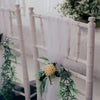
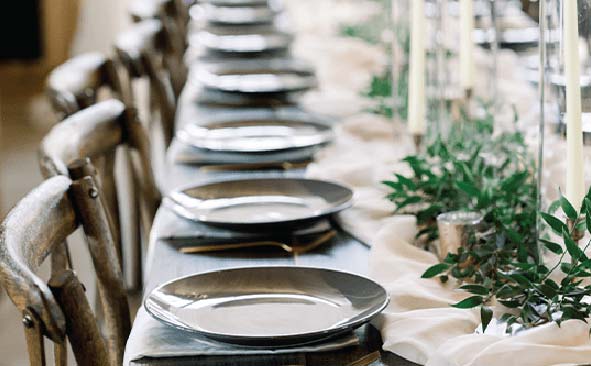
Folding chairs, often used in marquees and outdoor ceremonies, can also be dressed with sashes once covered - our folding chair covers range is built specifically for this. Chiavari chairs, which are popular at higher-end venues, are frequently left uncovered with a sash tied directly around the chair back, since the chair frame itself is considered part of the décor rather than something to hide. Cross-back and wooden farmhouse-style chairs work in a similar way, particularly with hessian or lace sashes that suit an exposed wood finish.
How Do You Tie a Chair Sash?
Tying a chair sash is straightforward once you know the basic wrap-and-knot method, though technique varies slightly by fabric.
The standard method starts with wrapping the sash around the back of the chair, roughly at the point where a person's lower back would rest, then crossing the two ends and pulling them snug so the fabric sits flat against the cover. From there, most people tie a simple double knot before shaping the excess fabric into two even loops and letting the remaining tails hang down.
The main variation between all sash fabrics is how forgiving they are. Satin and taffeta hold a shaped bow well and are the easiest fabrics to practise with. Organza is lighter and can slip slightly, so a tighter double knot at the base helps it hold its shape through a long event. Hessian, being a heavier woven fabric, tends to look best as a simple single or double knot rather than a full bow, since the material doesn't loop as neatly. For a full step-by-step breakdown with styling photography, our guide on wedding chair sashes walks through the process in more detail, including tips for tying large numbers of chairs efficiently ahead of an event.
Tying a Chair Sash Guide
-
Position the sash – Place the centre of the sash around the back of the chair, roughly where a person's lower back would rest.
-
Wrap the sash around the chair – Bring both ends around the chair back so they meet at the point where you want the bow or knot to sit.
-
Cross the ends – Cross one end over the other and pull both ends snug, keeping the fabric flat against the chair cover.
-
Tie a double knot – Secure the sash with a simple double knot to prevent it from slipping during the event.
-
Create the bow – If you're using satin, taffeta or another flexible fabric, form two even loops and pull them gently to create a balanced bow.
-
Adjust the tails – Straighten and position the remaining fabric so the tails hang evenly. Trim or fold them neatly if necessary.
-
Check the finish – Step back and make sure the sash is centred, secure and sitting at the same height as the other chairs.

How Do You Choose the Right Chair Sash Colour?
Chair sash colour should complement your existing colour palette rather than compete with it.
Choosing a chair sash colour usually starts with whatever palette is already anchoring the day - florals, table linen, bridesmaid dresses or a brand colour for a corporate event. From there, the sash can either match closely for a cohesive, tonal look, or contrast deliberately to create a focal point against a neutral chair cover.
Neutral sashes in ivory, champagne or dusty pink tend to be the safest choice for venues wanting broad appeal, since they photograph well and suit almost any theme. Bolder colours, such as our green chair sashes, work well when a couple or planner wants the seating to make more of a statement, particularly against white or ivory chair covers. It's worth remembering that venue lighting changes how colour reads in person compared with a screen, so where possible, order a sample swatch before committing to a large quantity.
Should Chair Sashes Match the Table Decorations?
Chair sashes generally look best when they echo, rather than exactly replicate, the table styling.
Matching chair sashes precisely to napkins or table runners can look intentional and polished, but it isn't the only approach that works. Many stylists prefer to echo one element of the table décor - the runner colour, for instance - rather than matching every single detail, which can start to feel flat or overly matched.
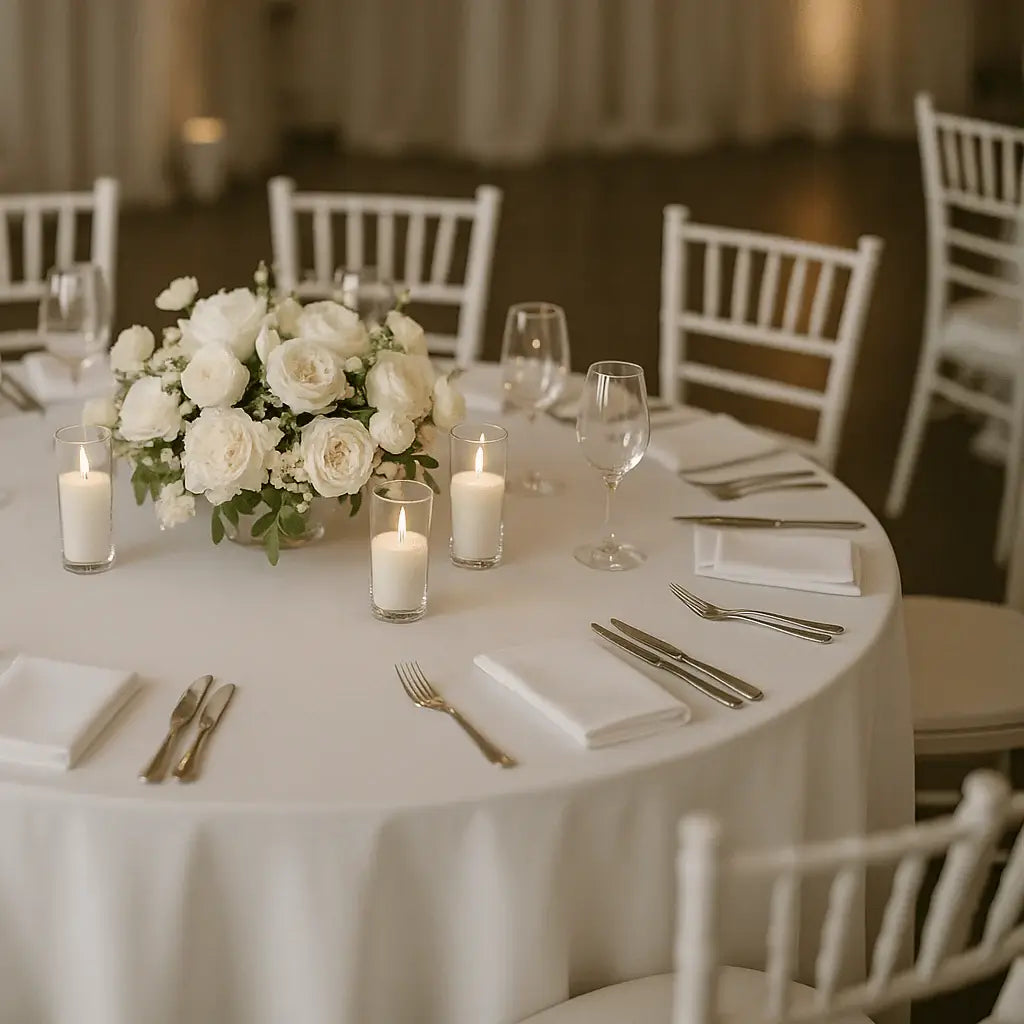
A common and reliable approach is to coordinate the chair sash with the table runner or overlay while allowing the tablecloth itself to stay neutral. Our round tablecloths for weddings and linen table runners are often paired this way, giving a coordinated but not identical finish. Where budgets or timelines are tight, choosing sashes and linens from the same broad colour family, rather than an exact colour match, tends to be more forgiving and easier to source consistently in bulk.
Chair Sash vs Chair Band: What Is the Difference?
A chair sash is tied into a bow or knot, while a chair band is a fixed-width strip fastened flat around the chair.
This is one of the most common questions we're asked, since the two terms are sometimes used interchangeably even though the products differ. A chair sash is a long strip of fabric, generally tied by hand into a bow, knot or drape, giving a soft, dimensional finish. A chair band, by contrast, is typically a shorter, pre-shaped strip - often elasticated or fastened with a buckle or Velcro closure - designed to sit flat and require no tying at all.
Bands are popular for large-scale venues and hire companies because they can be fitted far more quickly across a large number of chairs, whereas sashes take longer per chair but offer a more elegant, bespoke finish. Sequin and spandex bands, such as those in our sequin bands collection, are a good example of the band format, giving a glamorous finish with almost no fitting time.
|
Feature |
Chair Sash |
Chair Band |
|
Fitting Method |
Tied by hand into a bow or knot |
Wrapped flat and fastened (buckle, clip or elastic) |
|
Fitting Time |
Longer, more hands-on |
Faster, easier for large volumes |
|
Visual Finish |
Soft, dimensional, decorative |
Sleek, flat, often sparkling or textured |
|
Typical Use |
Weddings, formal receptions |
Large events, quick turnarounds, hire companies |
How Many Chair Sashes Do You Need?
You generally need one chair sash per chair being dressed, plus a small buffer for spares.
The starting calculation is simple: one sash per chair you intend to dress. Where the maths gets more complicated is deciding which chairs to include. Some couples and planners dress every chair in the room, including evening reception seating, while others only dress the top table, the ceremony aisle seats, or the head table at a corporate dinner to keep costs down.
It's worth ordering a small buffer beyond the exact headcount - typically an extra 5–10% - to allow for last-minute seating changes, staining, or a sash that doesn't tie as neatly as the rest. Because our chair sashes are supplied wholesale, ordering a slightly larger quantity than needed is usually more cost-effective than ordering exact numbers and risking a shortfall on the day.

How Do You Care for and Store Chair Sashes?
Chair sashes last longest when they're stored flat or loosely rolled, and cleaned according to their fabric type.
Most polyester-based sashes, including satin, organza and taffeta, can be machine washed on a gentle, cool cycle and hung to dry, though ironing on a low heat with a protective cloth is recommended if the fabric has creased in storage. Hessian and lace need slightly more care, since hessian can fray at cut edges if not properly stitched, and lace can snag if stored alongside rougher fabrics.
For storage between events, sashes should be kept clean, dry and out of direct sunlight, which can cause synthetic sash fabrics to yellow over time. Folding sashes loosely rather than tying them tightly for storage helps avoid permanent crease lines, and separating fabrics by type - keeping sequin bands away from delicate lace, for instance - prevents snagging in transit or in storage boxes. Businesses managing large stock volumes often find that labelled, colour-separated storage crates make the biggest practical difference when preparing for back-to-back events.
How Do You Style Chair Sashes for Different Events?
Chair sash styling should shift with the formality and setting of the event, from relaxed daytime parties to formal evening dinners.
The same sash can look completely different depending on how it's styled and what it's paired with. For daytime, casual or outdoor events, a simple knot in a natural or pastel fabric tends to suit the relaxed atmosphere better than a large, structured bow. For formal evening events - awards dinners, galas or black-tie receptions - a fuller bow in satin or taffeta, paired with a darker or jewel-toned palette, reads as more polished under evening lighting.
Corporate events often lean towards flat bands in brand colours for speed and consistency across large chair counts, while weddings tend to favour the traditional tied bow, particularly for ceremony and top-table seating. Our classic wedding décor guide goes into more depth on how chair styling fits into a broader, cohesive venue look for more traditional and formal settings.
Chair Sash Ideas for Weddings and Events
The right wedding chair sash idea usually starts with your venue's existing character rather than a generic trend.
For a rustic barn wedding, hessian sashes knotted simply over exposed wooden Chiavari chairs, paired with our rustic collection of table runners and linens, create a cohesive countryside feel without looking overdressed. For a classic hotel ballroom reception, ivory or champagne satin bows over white chair covers remain a dependable, elegant choice that photographs beautifully under chandeliers.
Couples looking for something more contemporary often choose a single-colour sequin band for the evening reception, switching from a daytime bow to a sparkling band as the room transitions from ceremony to party. Layering is another popular idea worth trying: a sheer organza sash tied over a solid satin base adds depth and softness without needing to introduce an entirely new colour into the room. Whatever the setting, our broader chair sashes collection has enough colour and fabric variety to build almost any of these looks from a single supplier.

Conclusion
Chair sashes might be a small detail on paper, but they're one of the most cost-effective ways to transform a room full of ordinary chairs into a styled, coordinated event space. Whether you're drawn to a classic satin bow, a textured hessian knot, or a sparkling sequin band, the right choice comes down to your venue, your existing colour palette and how much fitting time you have on the day. As a UK wholesaler that's been supplying chair sashes, chair covers and table linens to venues and event professionals since 2008, we're always happy to advise on fabric, colour matching or bulk sash ordering - browse our full chair sashes and bands range to get started, or get in touch with our team for guidance on your specific event.
FAQs
What is a chair sash?
A chair sash is a strip of fabric wrapped around the back of a chair and usually tied into a bow or decorative finish. They are commonly used to add colour, texture and decoration to chairs at weddings, parties, events and venues.
What is a chair sash used for?
A chair sash is used to decorate event seating, typically tied around the back of a chair to add colour, texture and a finished, styled appearance to a venue.
What is the standard size of a chair sash?
Most chair sashes measure around 22cm wide and approximately 275–280cm long, though exact sizing varies slightly between fabrics and suppliers.
Can chair sashes be used without a chair cover?
Yes. Hessian and lace sashes in particular are often tied directly onto uncovered wooden or Chiavari chairs, since the chair frame is considered part of the overall look.
What fabric holds a bow shape best?
Satin and taffeta hold a defined, structured bow shape most reliably, which is why they're the most widely used fabrics for classic chair sash bows.
Is a chair sash the same as a chair band?
No. A chair sash is tied by hand into a bow or knot, while a chair band is a flat strip fastened with a buckle, clip or elastic closure and requires no tying.
Do chair sashes need to match the tablecloth exactly?
Not necessarily. Many stylists prefer to echo the table runner or one accent colour rather than matching every linen exactly, which often looks more natural and less flat.
How do I clean a satin or organza chair sash?
Most polyester satin and organza sashes can be machine washed on a cool, gentle cycle and hung to dry, with a low-heat iron used if creasing needs to be removed.
-
Posted in
Chair Sashes, wedding decor