

Do Chair Covers Fit All Chairs? A Sizing Guide by Chair Type
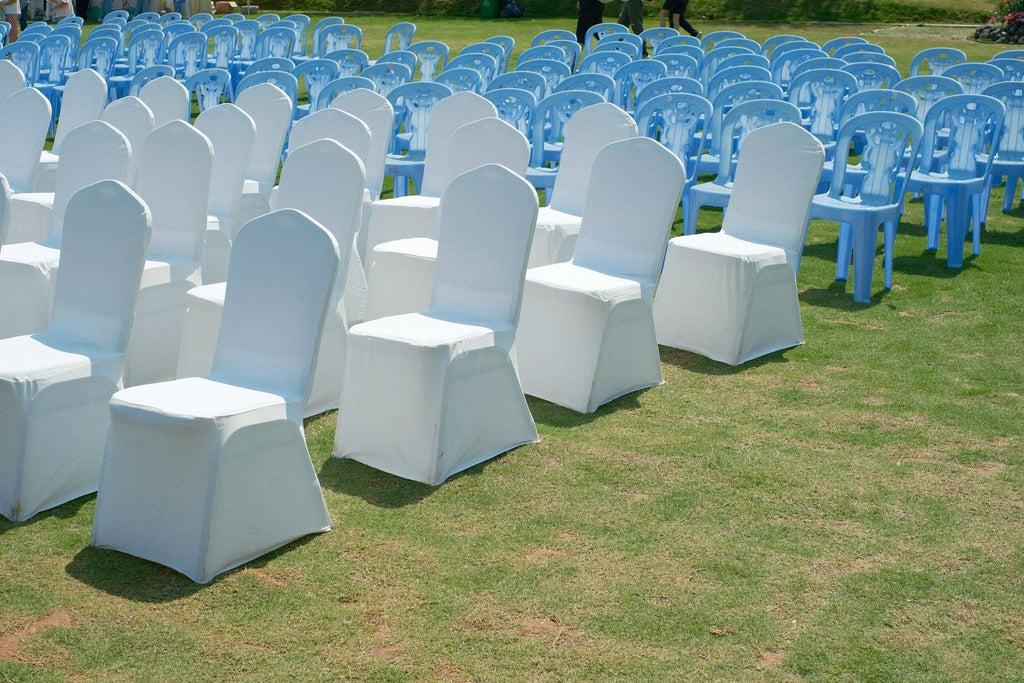
Quick Summary: Not every chair cover fits every chair, but the right style will fit almost any chair if you match the cover type to the chair shape rather than assuming one size covers all. Spandex and universal covers stretch to fit most standard banquet, Chiavari, and folding chairs, while chairs with unusual arms, high backs, or oversized frames need a tailored or made-to-measure cover.
If you've ever unwrapped a delivery of chair covers only to find they gape at the back of a Chiavari chair or won't stretch over a wide banquet frame, you'll know that "one size fits all" is one of the most misleading phrases in the events industry. Chair covers are one of the simplest ways to transform a room for a wedding, corporate dinner, or private party, but their success depends entirely on choosing a cover that's been designed for the chair underneath it. At IMA Trading, we supply chair covers and sashes to hundreds of venues, hire companies, and event stylists across the UK every month, and the question we're asked more than almost any other is some version of "will this actually fit my chairs?"
This guide answers that question properly, covering how sizing works, how to measure your own chairs, and which cover style is right for each common chair type, so your next order fits the first time.
Table of Contents
- What Is a Chair Cover?
- Do Chair Covers Fit All Chairs?
- How Do You Measure a Chair for a Cover?
- Do Chair Covers Come in Different Sizes?
- Chair Cover Sizes by Chair Type
- What Type of Chair Cover Fits Your Chair?
- How Should a Chair Cover Fit?
- What Happens If a Chair Cover Is Too Small or Too Large?
- Can You Use One Chair Cover Size for Different Chair Types?
- How to Choose the Right Chair Cover Size
- Find the Right Chair Covers for Your Chairs
- Conclusion
- FAQs
What Is a Chair Cover?
A chair cover is a fabric slip designed to fit over a chair frame and transform its appearance for an event.
At its simplest, a chair cover is a fitted or semi-fitted fabric shell that slides over an existing chair to hide its frame, disguise wear and tear, and create a coordinated look across a room. Covers are typically made from polyester, spandex (lycra), or a poly-lycra blend, and each material behaves differently once it's on the chair.
Polyester covers tend to be looser and more structured, draping over the chair with a slight fall at the base, while spandex covers cling tightly to the frame for a smooth, tailored finish. Foot pockets, back closures, and seat straps are added to keep the cover secure during a long event, and it's these small construction details, as much as the fabric itself, that determine whether a cover will genuinely hold its shape on a specific chair.
Do Chair Covers Fit All Chairs?
Most chair covers fit most standard chairs, but "most" is not "all," and that distinction matters when you're ordering for a real venue.
Universal and spandex chair covers are engineered with stretch and give precisely so they can accommodate a range of chair widths and heights, which is why they've become the default choice for weddings and function rooms. They generally perform well on standard banquet chairs, folding chairs, and many Chiavari-style frames, because those chairs share broadly similar proportions.
Where fit becomes unpredictable is with chairs that fall outside that standard profile: chairs with wide armrests, ladder backs, curved or barrel frames, high wingback designs, or unusually tall or short seats. On these, even a generous stretch cover can pull too tight in one area while sagging in another, or fail to reach the floor at all.

How Do You Measure a Chair for a Cover?
Taking four simple measurements before you order removes almost all of the guesswork from chair cover sizing.
Rather than guessing from a photo or relying on a chair's general "type," it's worth spending five minutes with a tape measure on the actual chair you intend to cover, particularly if you're ordering in bulk. Getting this right the first time avoids costly reorders and mismatched stock sitting in storage.
Seat Width and Depth
Measure the seat from the widest point side to side, and separately from the front edge to the back of the seat. This tells you whether the cover's base panel will sit comfortably around the chair without straining at the sides.
Back Height
Measure from the top of the seat to the highest point of the backrest. Chair cover backs are cut to standard height bands, so a chair that's notably taller or shorter than average may need an XL or petite option rather than the standard size.
Total Chair Height
Measure from the floor to the top of the backrest. This determines how far the cover needs to fall to reach the floor cleanly, particularly important for covers with a "poof" or bow-tie back style.
Arm Presence and Width
If the chair has arms, measure the width across the outside of the armrests and the height of the arm from the seat. Armed chairs almost always need an "arm cover" cut, as standard covers are not designed to stretch around a fixed armrest.
Measuring a Chair Cover Summary
The below table provides an overview of how to measure covers for your event chairs.
|
Measurement |
How to Measure |
Why It Matters |
|
Seat Width |
Measure across the seat from the widest point, side to side. |
Helps ensure the cover fits comfortably around the seat without pulling or straining. |
|
Seat Depth |
Measure from the front edge of the seat to the back. |
Determines whether the cover has enough fabric to fully accommodate the seat. |
|
Back Height |
Measure from the top of the seat to the highest point of the backrest. |
Helps determine whether you need a standard, petite or XL cover. |
|
Total Chair Height |
Measure from the floor to the top of the backrest. |
Shows how far the cover needs to extend, particularly for full-length or floor-length covers. |
|
Arm Width |
If applicable, measure across the outside of the armrests. |
Armed chairs usually require specially designed covers with enough room around the arms. |
|
Arm Height |
Measure from the seat to the top of the armrest. |
Ensures the cover can accommodate the height and position of the armrests. |
Do Chair Covers Come in Different Sizes?
Yes, chair covers are produced in several distinct sizes and cuts, even within a single fabric type.
Chair covers are available in a range of sizes to suit different chair dimensions, shapes and styles. Choosing the right size helps create a secure, smooth fit while avoiding excess fabric, stretching or gaps around the chair.
Standard Chair Covers
Standard chair covers are designed to fit the most common chair dimensions, making them suitable for many banquet, dining and event chairs. However, measurements can vary between manufacturers, so it is still important to check the cover dimensions against your chair before ordering.
XL Chair Covers
XL chair covers provide additional fabric and coverage for larger or deeper chairs that may not fit comfortably inside a standard cover. They can be useful for oversized banquet chairs, wider seats or chairs with taller backs.
Petite Chair Covers
Petite or smaller chair covers are designed for compact seating where a standard cover may leave too much excess fabric. A closer fit helps prevent bunching and gives the chair a neater appearance.
Armchair Covers
Armchair covers are specifically cut to accommodate chairs with fixed arms. Standard chair covers generally cannot stretch properly around armrests, so an armchair-specific design is usually required.
Different Cuts & Styles
Size is not the only factor affecting fit. Chair covers can also come in different cuts, including straight-front and arch-front styles, which change how the fabric sits around the base of the chair. The right size and cut should therefore be chosen based on the chair's measurements and overall shape, rather than fabric type alone.

Chair Covers by Chair Type
Different chair types have different proportions, and the cover that flatters a slim folding chair will rarely suit a wide Chiavari frame.
Chair cover sizing varies depending on the shape, dimensions and construction of the chair. The right cover should accommodate the chair's back, seat and any additional features such as arms without pulling, bunching or leaving exposed areas.
Banquet Chairs
Standard chair covers are commonly suitable for banquet chairs, but always check the back width, seat dimensions and overall height before ordering.
Folding Chairs
Folding chairs come in several shapes and sizes, so a cover designed specifically for folding chairs will usually provide a better fit than a generic option.
Chiavari Chairs
Chiavari chairs have a distinctive narrow frame and tall, open back, meaning they require covers designed to suit their specific proportions.
Dining Chairs
Standard dining chairs can often accommodate universal or fitted covers, although differences in seat width, back height and depth can affect the final fit.
High-Back Chairs
High-back chairs require covers with sufficient length and width to fully accommodate the taller backrest without pulling or exposing the frame.
Chairs With Arms
Chairs with arms generally need specially designed armchair covers with additional fabric and openings to accommodate the armrests.
Chair Cover by Type Summary
The table below summarises typical dimensions and the cover style that tends to work best for each common chair type found in UK venues. These are general guides based on standard UK event chairs; always check your own chair cover measurements against the specific frame you're covering, since manufacturers vary.
|
Chair Type |
Typical Width (in our stock) |
Typical Height (in our stock) |
Our Recommended Cover Style |
|
Standard Banquet Chair |
40–46cm |
45–50cm |
Universal spandex or polyester, standard cut |
|
Chiavari Chair |
38–42cm |
85–90cm (incl. legs) |
Chiavari-specific spandex, fitted cut |
|
Folding Chair |
38–42cm |
80–85cm |
Folding chair cover, fitted seat and back |
|
Armchair / Carver |
44–50cm |
45–50cm (plus arms) |
Arm cover, dedicated arm-cut spandex |
|
Wingback / High-Back Chair |
45–55cm |
100cm+ |
Made-to-measure or XL cover |
Because these figures are typical rather than universal, they work best as a starting point for your own chair cover fitting guide, with a physical measurement of one sample chair used to confirm the final size before a bulk order is placed.
What Type of Chair Cover Fits Your Chair?
The right cover type depends less on your event's theme and more on the physical shape of the chair frame you're dressing.
Choosing between spandex, polyester and specialist covers is primarily a practical decision based on your chair's shape and dimensions.
Spandex & Universal Covers
These stretch-fit covers are the most forgiving option and the best starting point for anyone unsure which cover to buy, since they flex to accommodate small variations between chairs of the same general type. They're a strong match for our universal spandex chair covers range, which is built specifically to handle the slight inconsistencies you get across a large stock of banqueting or Chiavari chairs.
Polyester Covers
Polyester covers have less stretch and more structure, giving a fuller, more traditional silhouette that's popular for classic wedding styling. They're forgiving on standard banquet chairs but less suited to chairs with pronounced curves or arms, since the fabric doesn't flex around obstacles the way spandex does. Our polyester chair covers collection covers the most popular colourways for this style.
Folding Chair & Arm Covers
Folding chairs and armed chairs both need a cover cut specifically for that frame, because their proportions differ enough from standard banquet chairs that a universal cover typically won't sit correctly. Our dedicated chair covers for folding chairs range is built around the narrower, taller profile of a typical folding frame.
How Should a Chair Cover Fit?
A well-fitting chair cover should sit smoothly against the chair frame with no visible sagging, gaping, or pulling at the seams.
The ideal chair cover should follow the contours of the chair closely without being stretched so tightly that the fabric is under constant tension. It should be straightforward to put on and remove, provide full coverage of the chair, and remain securely in position when the chair is moved or used during an event.
A correctly sized cover should also create a consistent appearance across a room. This is particularly important for weddings, conferences, parties and other events where multiple chairs need to look uniform. Small differences in chair dimensions can become much more noticeable when dozens of chairs are arranged together.
Chair Cover Fit Summary
|
Area |
What a Good Fit Looks Like |
|
Chair Back |
The fabric should sit smoothly over the backrest, covering it completely without excessive stretching, sagging or exposed sections. There should be enough material to accommodate the full height and width of the back without pulling at the corners or seams. |
|
Seat |
The cover should completely cover the seat and sit securely around its edges. It should not pull tightly across the corners, bunch excessively underneath or leave parts of the original chair visible. |
|
Back Closure |
Zips, ties, Velcro straps or other fastenings should sit flat and close securely without excessive tension. If a fastening is difficult to close or appears strained, the cover may be too small for the chair. |
|
Sides |
The fabric should follow the sides of the chair without creating large gaps or excessive folds. Some natural movement in the material is normal, particularly with looser-fitting covers, but large amounts of excess fabric can indicate that the cover is too large. |
|
Base |
The cover should hang evenly around the base of the chair and reach the intended length. For floor-length covers, the fabric should not drag heavily on the floor or ride up noticeably at the front or sides. |
|
Legs |
Where foot pockets or leg pockets are included, they should hold the cover securely around each chair leg. The pockets should prevent the fabric from shifting without pulling so tightly that they place unnecessary strain on the material. |
|
Overall Appearance |
The finished cover should look neat and consistent from the front, sides and back. The chair frame should be adequately concealed, with minimal excess fabric, bunching or visible areas of pulling. |
What Happens If a Chair Cover Is Too Small or Too Large?
Getting the size wrong causes different, but equally visible, problems depending on which direction the error runs.
Both scenarios are common, particularly with mixed seating stock, and understanding the specific failure mode helps you diagnose the problem quickly if covers arrive and don't sit right.
Signs a Chair Cover Is Too Small
A cover that is too small will usually be obvious once it is fitted. The fabric may pull tightly across the seat or back, seams may appear stretched, and fastenings may be difficult to close. You may also notice exposed areas of the chair frame, particularly around the sides, corners or base.
Signs a Chair Cover Is Too Large
An oversized cover can create a different set of problems. Excess fabric may gather around the seat, hang loosely at the sides or pool on the floor, making the chair look untidy. While some loose-fitting covers are intentionally designed with additional fabric, excessive bunching can indicate that a smaller size or more fitted cut would be more appropriate.
Can You Use One Chair Cover Size for Different Chair Types?
In practice, a single cover size can work across several similar chair types, but it won't stretch across genuinely different frame shapes.
Universal spandex covers are deliberately designed with this flexibility in mind, which is why they're the most popular choice for venues and hire companies managing large, mixed stock rather than a single uniform chair type. From our experience, we find that a standard universal spandex cover will typically move comfortably between different makes of banquet chair, since the underlying proportions (seat width, back height, overall shape) tend to sit within a similar range even across different manufacturers.
However, that same cover won't perform on a folding chair, an armed carver, or a tall Chiavari frame, because those chairs differ in height, arm presence, or leg structure in ways that stretch fabric alone can't compensate for. The safest approach is to treat each distinct chair shape as its own sizing category, rather than assuming that "fits one, fits all."
How to Choose the Right Chair Cover Size
Choosing correctly comes down to knowing your chair type first, then matching cover style and size to that specific frame rather than to the event as a whole.
Start by grouping your chairs by shape rather than by room or table, since a venue with both banquet chairs and a handful of armed carvers effectively needs two different cover orders, not one.
Next, take the core measurements outlined earlier on a representative sample chair from each group, rather than relying on a supplier's generic size chart alone. Order a single sample cover before committing to a bulk quantity wherever possible, particularly for a new chair type you haven't covered before, since a five-minute test fit can prevent an expensive reorder later.
Finally, consider the fabric as well as the size. Spandex offers more stretch, making it more forgiving on chairs with curves or slight variations in dimensions.
Choosing the Right Chair Cover Size Summary
Step 1: Identify Your Chair Type
Start by identifying whether you have banquet, folding, dining, Chiavari or armchairs. Different chair types have different shapes and dimensions, so knowing the chair type helps you find a suitable cover.
Step 2: Measure Your Chair
Measure the seat width, seat depth, back height and total chair height. If your chair has arms, measure their width and height as well.
Step 3: Check the Cover Measurements
Compare your chair measurements with the supplier's sizing information. This helps you choose a cover that is large enough to provide full coverage without being unnecessarily loose.
Step 4: Choose the Right Style
Choose a cover designed for your chair and the finish you want. Stretch covers offer more flexibility, while chairs with arms or unusual shapes may need a specially designed cover.
Step 5: Test a Sample
If you're buying covers in bulk, test one on your chair first. This gives you a chance to check the size, coverage and overall appearance before ordering a larger quantity.
Step 6: Check the Fit
Make sure the cover sits smoothly and securely without excessive pulling, sagging or bunching. Check the front, sides and back to ensure the entire chair is covered and the finished look is neat.
Find the Right Chair Covers for Your Chairs
Once you know your chair type and measurements, browsing by category makes it much easier to land on the correct fit rather than scrolling a generic catalogue.
If you're dressing a full wedding breakfast, our wedding chair covers collection is organised by style and colour to suit ceremony and reception seating alike, while our wider wholesale chair covers range is built for venues and hire companies ordering at volume across mixed chair stock. For outdoor ceremonies and marquee events, our outdoor wedding chair covers are cut from weather-resistant fabric while keeping the same fitted profile as our indoor ranges.
If you're planning colour-coordinated styling alongside your covers, our guide to wedding chair sashes is a useful next read for finishing the look once your covers are sized and ordered.
Conclusion
Chair covers don't fit all chairs universally, but with the right measurements and a cover style matched to your specific chair type, you can get a fit that looks tailored rather than generic across an entire room. Take the time to measure seat width, back height, total height, and arm presence before you order, group your chairs by shape rather than by room, and lean on a sample order when you're covering a chair type for the first time.
As a UK wholesaler supplying chair covers to venues, hire companies, and event stylists every week, we've seen first-hand how much difference correct sizing makes to the finished look of a room, and we're happy to help you match covers to your chairs if you're ever unsure. Browse our full chair covers for events range or get in touch with our expert team for sizing advice on your specific chairs.
Frequently Asked Questions About Chair Cover Sizes
Do spandex chair covers fit all chairs?
Spandex chair covers fit the majority of standard banquet, Chiavari, and many folding chairs thanks to their stretch, but chairs with arms, unusual curves, or oversized frames generally need a dedicated cut rather than a universal spandex cover.
Do chair covers fit all chairs?
No single chair cover fits every chair. Cover sizing depends on seat width, back height, total chair height, and whether the chair has arms, so matching the cover to the specific chair type is essential for a proper fit.
What is the standard chair cover size for UK banquet chairs?
Most UK banquet chairs fall within a seat width of roughly 40-46cm and a back height of 45–50cm, which is the range standard universal spandex and polyester covers are designed around.
Can I use the same chair cover for Chiavari and folding chairs?
Not reliably. Chiavari and folding chairs differ in overall height and leg structure, so a cover cut for one will typically sit incorrectly on the other, even if the seat width is similar.
How do I know if I need an XL chair cover?
If your chair's back height or seat width measurements exceed the standard ranges outlined in this guide, or if a standard cover visibly strains when fitted, an XL or made-to-measure cover is the safer choice.
Do armchairs need a special chair cover?
Yes. Armed chairs need a cover specifically cut with arm openings, since standard covers aren't designed to stretch around a fixed armrest without tearing or sitting incorrectly.